
Should Clinics Upgrade to Commercial Accessible Wheelchair Ramps?
Reliable Access Lets Patients Focus on Care
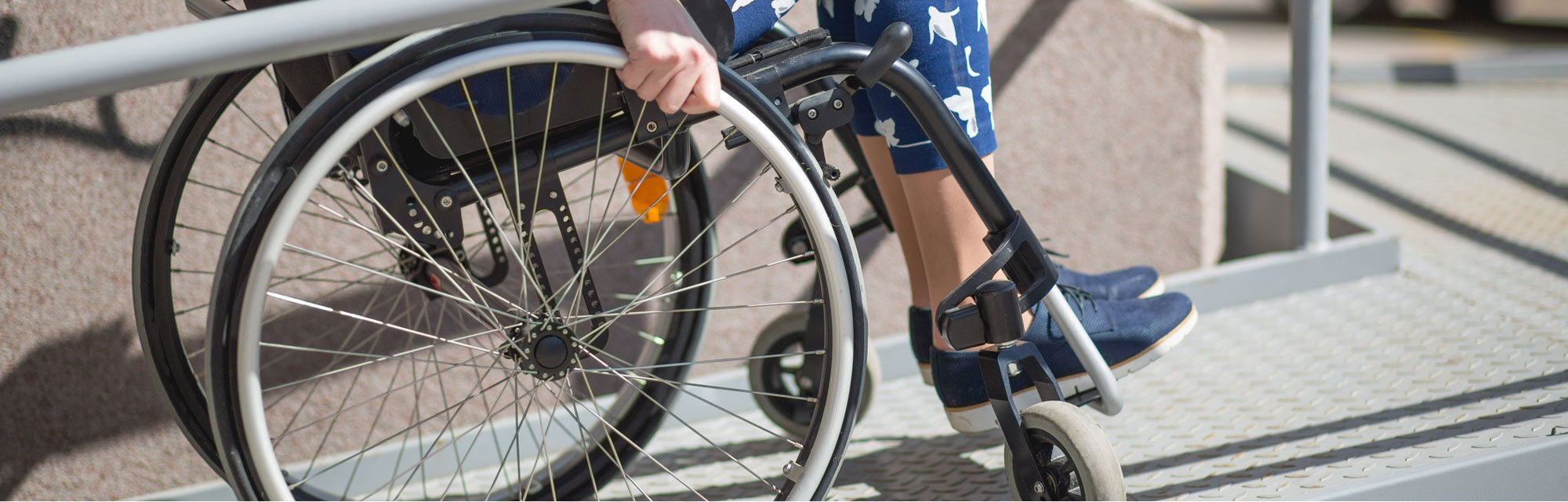
A clinic entrance is part of the patient care experience. Before a patient reaches reception, they need a safe, clear route from the parking area to the door, especially when using a wheelchair, walker, scooter, crutches, or other mobility aid. Commercial wheelchair-accessible ramps can make that arrival feel more predictable, respectful, and manageable for everyone.
November is a useful time for Canadian clinics to look closely at their entrances. Wet leaves, early snow, freeze-thaw weather, and shorter daylight hours can reveal hazards that were easier to miss in warmer months. We recommend reviewing your access route now, then considering whether a ramp upgrade, rental, or handrail solution could support safer year-round entry.
Entry Barriers Can Disrupt Clinic Operations
A single step, steep grade, uneven walkway, or narrow landing can turn an ordinary appointment into a difficult arrival. Patients may need extra time to enter, wait for help, or decide not to proceed if the entrance feels unsafe. This affects more than wheelchair users. Seniors, people recovering from surgery, and parents handling mobility equipment may all need a smoother route.
When we assess clinic access, we encourage you to look beyond the front door. The full approach should work as one connected path, from the parking area to reception. Common barriers include:
- Curbs or broken pavement between parking and the sidewalk
- Steep entrance grades or stairs without an accessible alternative
- Worn handrails, narrow landings, or tight door thresholds
- Slippery surfaces near the entrance
- Limited room to turn or pause with a mobility device
Staff members naturally want to help patients who are struggling at the door. Still, having staff lift, steady, or guide someone through an unsuitable entrance can create safety concerns and slow down reception duties. A properly planned ramp and handrail system gives patients a more independent route while helping your team stay focused on welcoming people and supporting care.
Access also shapes patient trust. If entering the clinic is difficult, patients may feel their needs were overlooked before their appointment even starts. By addressing barriers early, you show that your clinic is prepared to serve a wider range of people in your community.
Commercial Wheelchair-Accessible Ramps Improve Patient Safety
Commercial wheelchair-accessible ramps should be planned around the site, not treated as a one-size-fits-all product. Safe slope, stable walking surfaces, clear landings, and suitable handrails all work together to help people move at a comfortable pace. These details matter for wheelchair and scooter users, as well as patients who walk with a cane, walker, or support person.
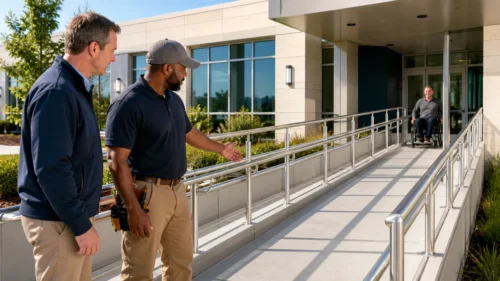
High-traffic clinic entrances need equipment that can handle frequent daily use. Modular ramp systems can be configured for different entrance heights, layouts, and available space, making them a practical option where a permanent access route is needed. Before installation, we review the space to help identify appropriate ramp length, landing placement, handrail needs, and connections to the existing approach.
A well-planned ramp can support more reliable access for routine visits, follow-up appointments, and unexpected care needs. Rather than asking patients to adapt to a difficult entrance, the entrance should support the people arriving there. We also recommend working with experienced accessibility professionals who can help you consider building, safety, and accessibility requirements that apply in your location.
Permanent and Temporary Ramps Fit Different Clinic Needs
Some clinics benefit from a long-term ramp solution. A permanent or semi-permanent modular ramp may be a good fit when the entrance is consistently elevated, the patient population includes many people with mobility challenges, or the clinic is improving access across the property. Modular systems can often adapt to the space available and may provide an alternative to extensive concrete work.
Other situations call for a temporary option. Ramp rentals can help maintain access while your clinic is changing, rather than leaving patients to deal with a barrier until long-term work is complete. We often see temporary ramp needs arise during:
- Renovations that affect the usual entrance
- Storm damage or sudden changes to a walkway
- A delay before permanent access work can begin
- Use of a temporary treatment or office location
- Short-term mobility access needs at the property
Handrails are another important part of the route. Some patients may be able to walk up an incline but need something steady to hold. Others may need extra confidence when surfaces are wet or when they are carrying personal items. We can help assess handrails, doorway clearance, landing space, traction, and transitions between the parking lot, sidewalk, ramp, and entrance so these elements work together.
Winter-Ready Planning Protects Access
Rain, slush, snow, and ice can quickly change a safe entrance into a risky one. Ramp surfaces need dependable traction, but regular maintenance matters too. Your snow-clearing and de-icing plan should include the ramp, landings, handrails, and the path leading to them. A clear doorway is not enough if the route immediately before it is slippery or blocked.
Drainage deserves attention as well. Water that collects near the ramp, landing, or door can freeze and make movement harder for people using wheels or walking aids. During a site review, we suggest looking at where snow is piled, where meltwater travels, and whether the approach remains open during typical winter maintenance.
Fast support can be especially helpful when a problem appears after the first snowfall or during a renovation. Regional Ramp provides ramp supply, installation, rentals, and handrail support for short- and long-term mobility access needs. Planning in November gives you time to address concerns before harsher winter weather adds pressure to the situation.
Move Forward with a Clinic Access Assessment
Start by observing the entrance as patients use it. Document uneven areas, tight turns, steep spots, and places where staff are regularly asked to provide physical support. Looking at the route from parking to reception can reveal issues that are easy to overlook when entering on foot without a mobility aid.
A safer clinic entrance comes from treating access as part of everyday patient service. Clear routes, dependable surfaces, appropriate ramps, and supportive handrails can help patients arrive with more comfort and independence, whatever the season brings.
Improve Access With a Ramp Built for Your Clinic
At Regional Ramp, we help clinics choose commercial wheelchair-accessible ramps that suit their entrances, traffic flow, and accessibility needs. Our team can help you assess practical options for a reliable, durable installation. Ready to discuss your project? Contact us for guidance.